

If we could persuade every patient to change one thing about their skincare routine, it would be this one. Not a treatment, not a serum. Daily, well-applied SPF.
Why we go on about it
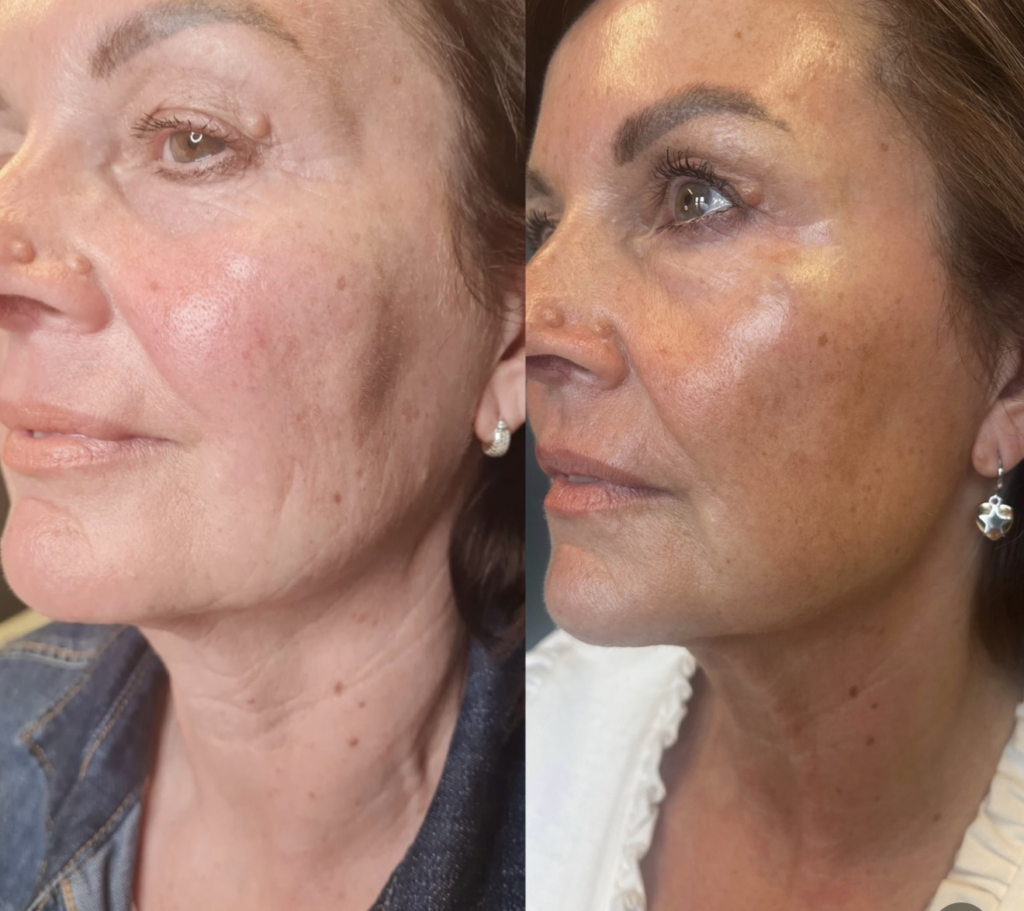
Around 80% of visible skin ageing is attributed to UV exposure — fine lines, loss of firmness, uneven tone and texture. UVA reaches the skin all year round, on grey days as much as bright ones, and passes through glass, which is why we recommend SPF every single day rather than only on holiday.
SPF and pigmentation
If you are dealing with hyperpigmentation, melasma or dark marks left behind by spots, SPF is not one part of the plan — it is the plan. Pigment cells are provoked by sun exposure, so without daily protection even the best in-clinic treatment is working against the tide. It is also why we will not begin certain pigmentation treatments until we know a patient’s SPF habit is solid.
Here is something people are often surprised by: it is not only UV that drives pigmentation. Visible light — including the light from screens and indoor lighting — plays a part too, and a clear sunscreen does very little to filter it.
Why we recommend a tinted SPF
This is where a tinted formula earns its place. The mineral pigments that give a tinted sunscreen its colour — iron oxides — also shield the skin from visible light, which a clear SPF cannot meaningfully do. For anyone treating pigmentation, that is a clinical difference rather than a cosmetic one.
And yes, that includes blue light. High-energy visible light, roughly 400 to 500 nanometres, is the part of the visible spectrum most associated with triggering pigment, and it is the part iron oxides help to filter. A 2025 randomised study following melasma patients through the summer found that pigmentation worsened significantly less in those using a visible-light-protective tinted sunscreen than in those using an untinted one of the same SPF. So if you are on a pigmentation plan with us, the tint is not optional in our view.
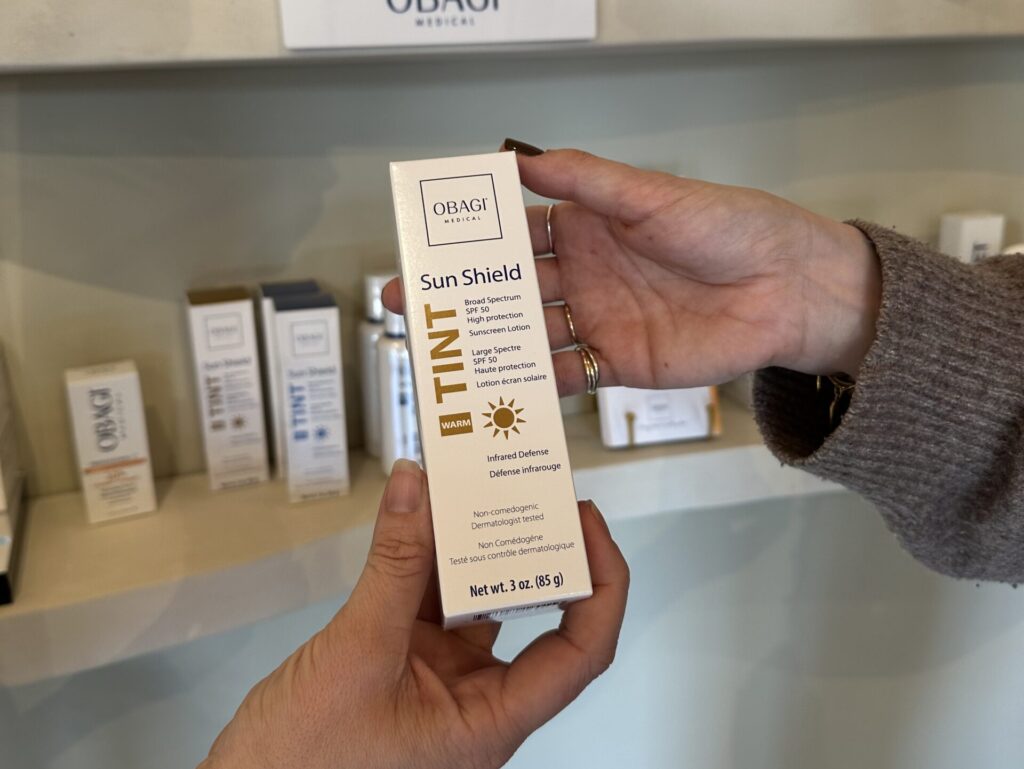
Our clinic favourite is the Obagi Sun Shield Tint Broad Spectrum SPF 50, which comes in Warm for golden and olive undertones and Cool for pink and beige. It gives UVA and UVB protection with a sheer finish that most of our patients end up wearing instead of foundation, and it is non-comedogenic and fragrance-free.
The two-hour rule
Sunscreen does not last all day. It rubs off on collars and hands, sweats off, and breaks down in sunlight. Reapply at least every two hours when you are outdoors, and more often if you are swimming or perspiring.
Most people also apply far too little. For the face and neck, aim for roughly two fingers’ length of product — noticeably more than feels natural at first.
But what about vitamin D?
This is the question we are asked most, and it is a fair one. In practice, research has consistently found that people who use sunscreen regularly do not end up vitamin D deficient because of it. Nobody applies sunscreen perfectly enough to block it entirely.
In the UK, the bigger issue is our latitude. Between October and early March, the sunlight simply is not strong enough for the skin to make vitamin D at all, whatever you are or are not wearing. NHS guidance is that everyone should consider a daily 10 microgram vitamin D supplement through autumn and winter, and some people are advised to take one year-round.
So the honest answer is that vitamin D is a diet and supplement question, not a reason to skip your SPF.
Come and take a proper look
If you would like us to take a deeper look at your skin after the summer months, or you are worried about sun damage from our very hot summer, come and see us in clinic. Your complimentary consultation includes a full skin analysis on our Observ 320 scanner and a personalised skin treatment plan.
The scanner shows the sun damage sitting beneath the surface, long before it becomes visible to the eye — which tends to be far more persuasive than anything we could write here.
Schedule your complimentary consultation today.